Why Your Shirts Make You Look Heavier Than You Actually Are (And Why It Has Almost Nothing To Do With Your Weight)
Based on how garments drape over the male torso — and what thousands of men over 55 are doing about it.

Why Your Shirts Make You Look Heavier Than You Actually Are (And Why It Has Almost Nothing To Do With Your Weight)
Based on how garments drape over the male torso — and what thousands of men over 55 are doing about it.
You've probably noticed this without ever putting words to it.
In the mirror, front-on, you look fine. Perfectly normal.
Then someone takes a photo of you from the side — at a wedding, a barbecue, a family thing — and you don't recognise the man in it.
Same body. Same shirt. Same day.
So why the difference?
Most men assume it's the weight. They assume the camera is showing something the mirror politely hides.
It isn't. It's the shirt.
And once you understand what your shirt is actually doing, you'll understand why the last ten years of trying to fix this haven't worked.
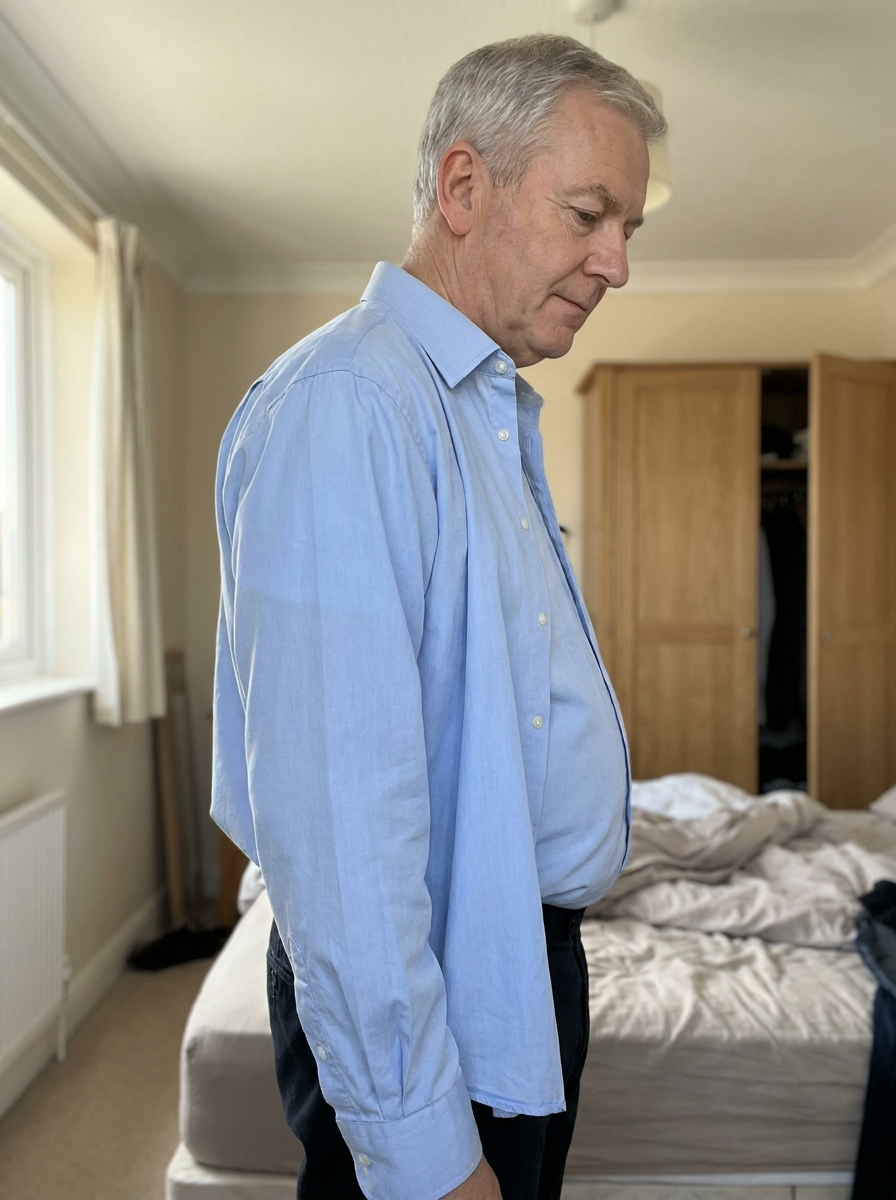
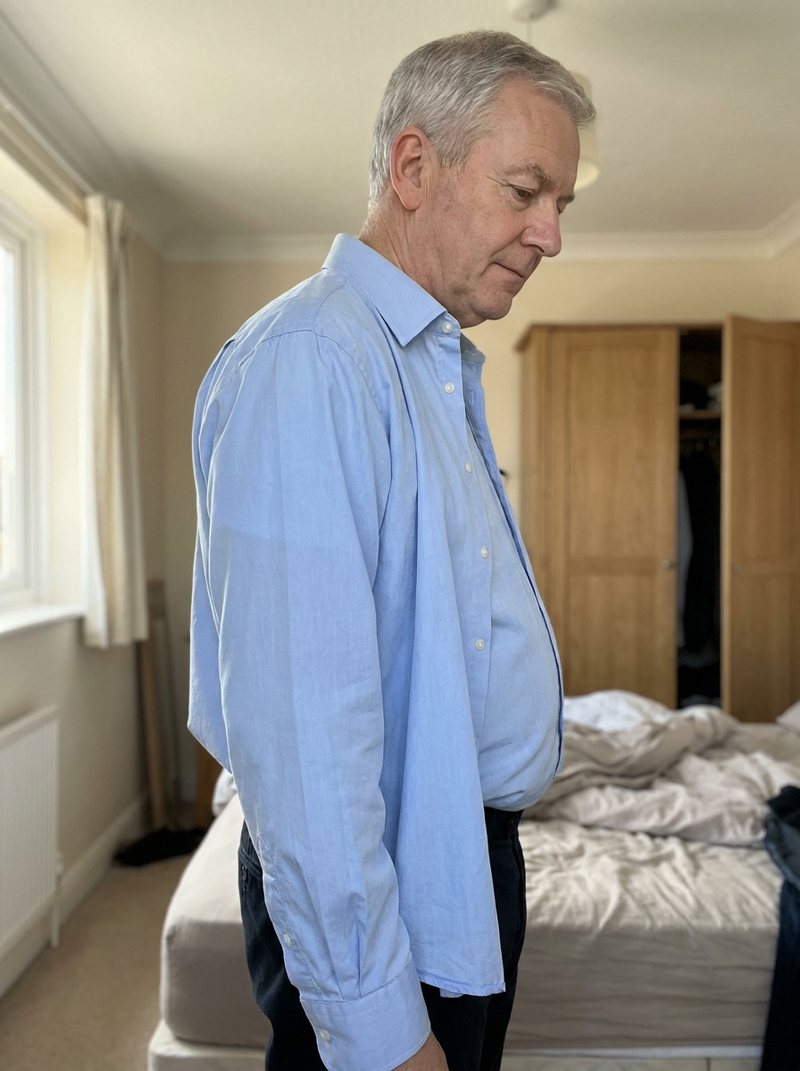
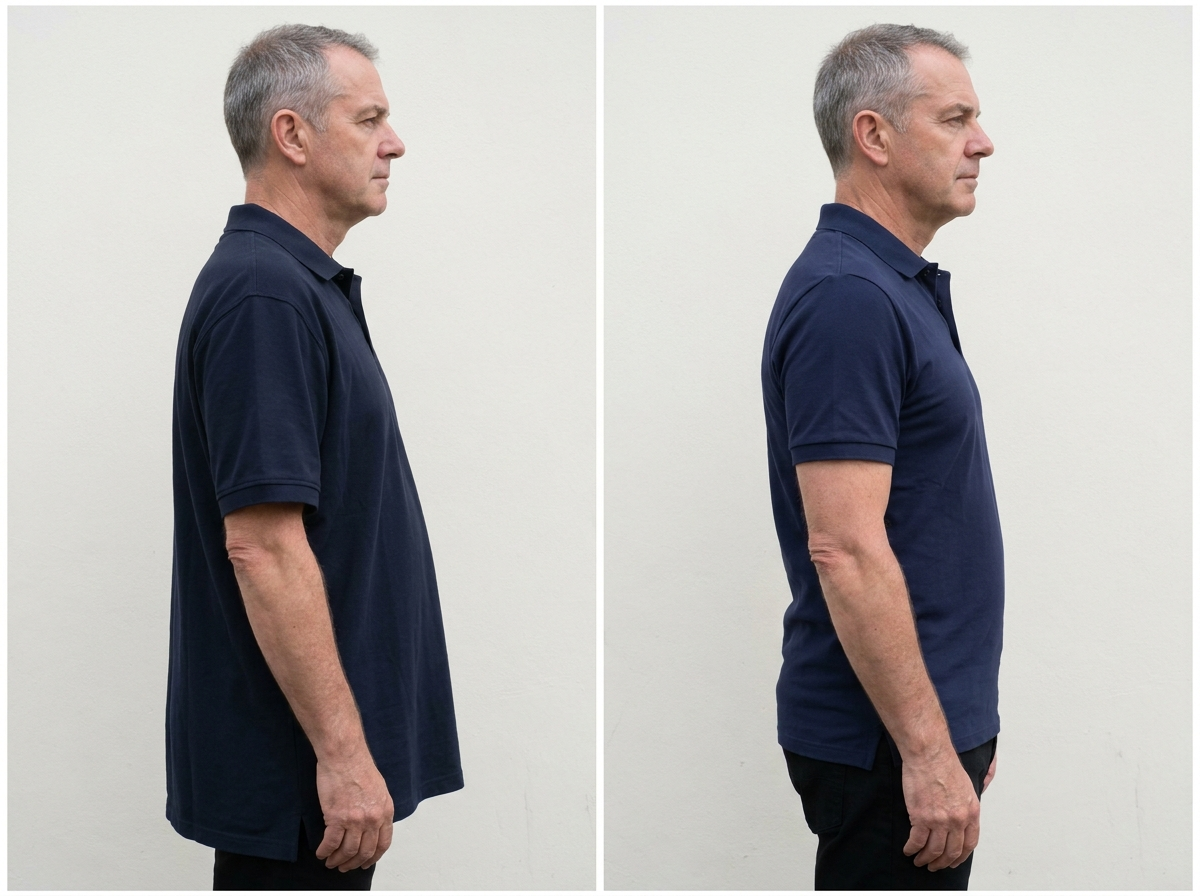
A shirt is not shrink-wrap. It doesn't follow the shape of your body.
It hangs.
And it hangs from the furthest point it touches.
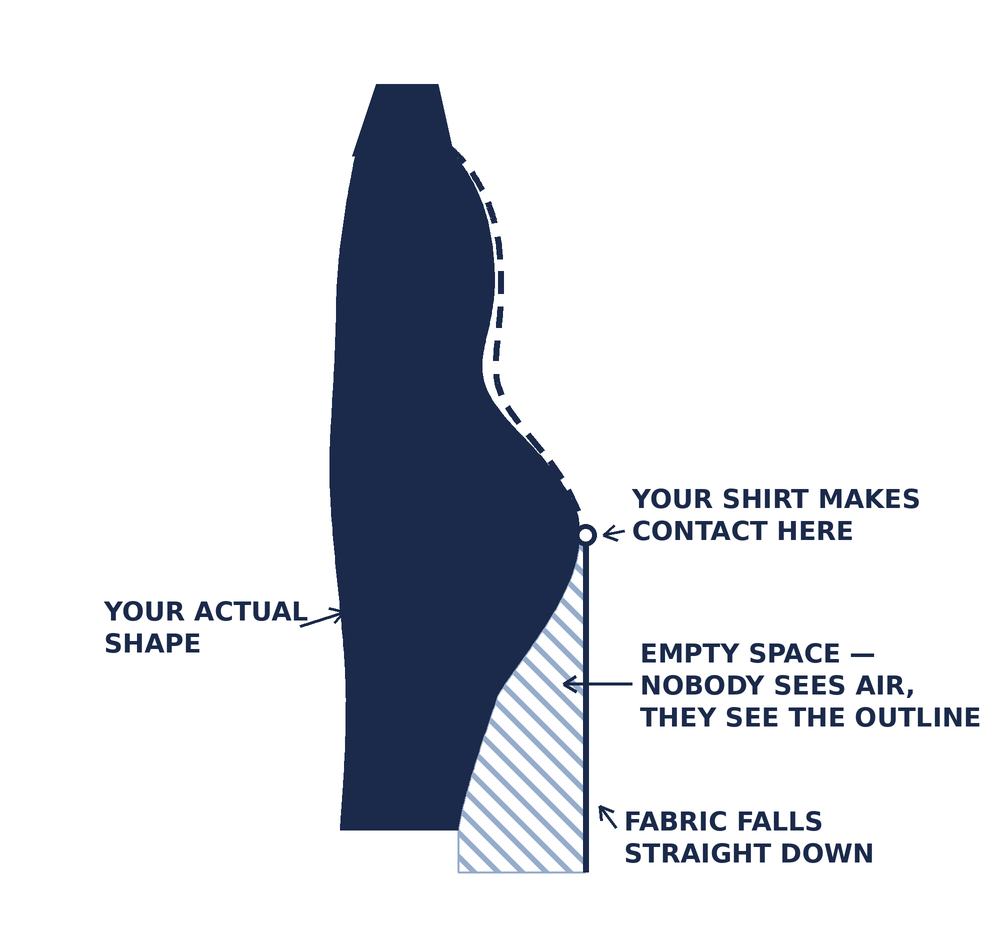
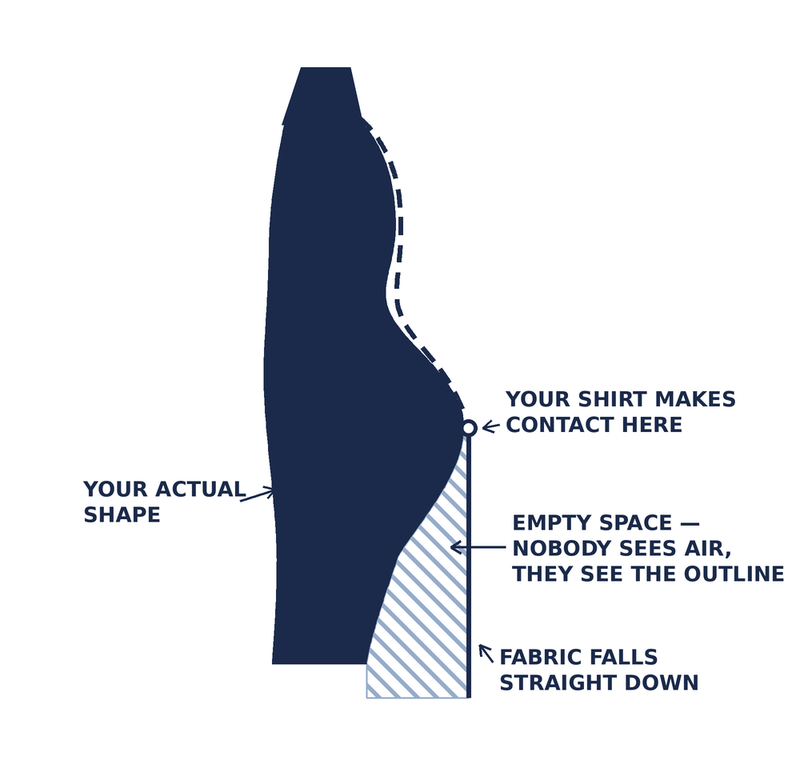
If your stomach sits two inches forward of your chest, the fabric makes contact there — and then falls straight down from that point to your waistband.
Everything behind that line is empty air. But nobody can see empty air. All they see is the outline.
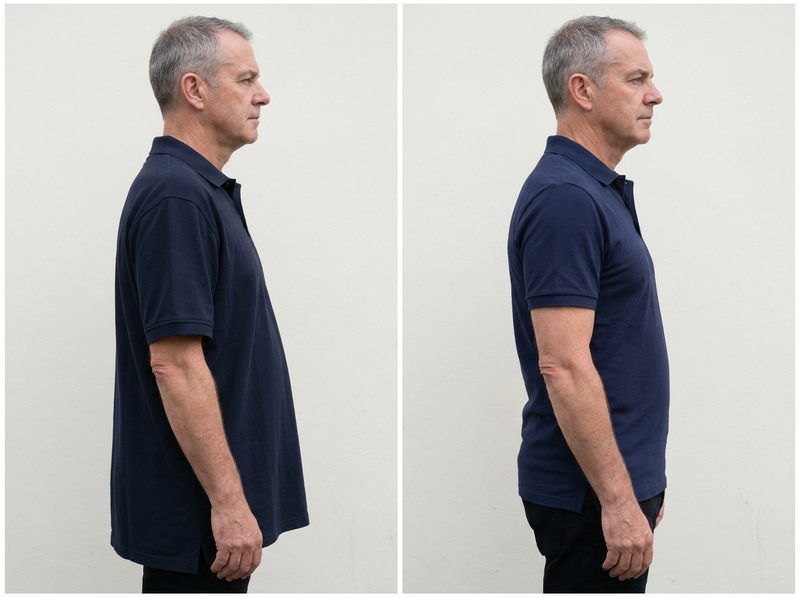
So from the side, your torso reads at the width of its widest point. Top to bottom. In one flat, unbroken line.
Your shirt isn't showing people your body. It's showing them a box drawn around the widest part of it
That's the difference between the mirror and the photograph. The mirror shows you front-on, where the drape line is hidden. The camera catches you at an angle, where it isn't.
This is the part most men find hard to hear, because it means years of a deliberate strategy were working against them.
When a shirt starts pulling across the stomach, the instinct is to size up. More room. Less cling. Less showing.
But sizing up doesn't move the drape point. The fabric still makes contact at the furthest point forward — it just adds more material hanging off it.
More fabric. Same starting line. A wider silhouette.
The same is true of the other things men reach for:
None of these are stupid. They're reasonable responses to the problem. They just treat the shirt as the thing to hide behind, when the shirt is the thing creating the outline in the first place.
You can. It's good for you and it will help.
But be honest about the timeline.
Losing enough weight to visibly change how a shirt drapes takes months of consistent work — and the drape point is the last thing to change, because abdominal fat is generally the last to go.
There's also something nobody mentions: a leaner man with poor posture still has a drape problem. Rounded shoulders roll the chest inward and push the abdomen forward, which moves the contact point further out. That's why some men who've lost significant weight still don't like how shirts sit on them.
The gym is a good long-term answer to a different question. It is not an answer to what you're wearing on Saturday.
That's the gap. And it's the gap almost nothing on the market fills properly.

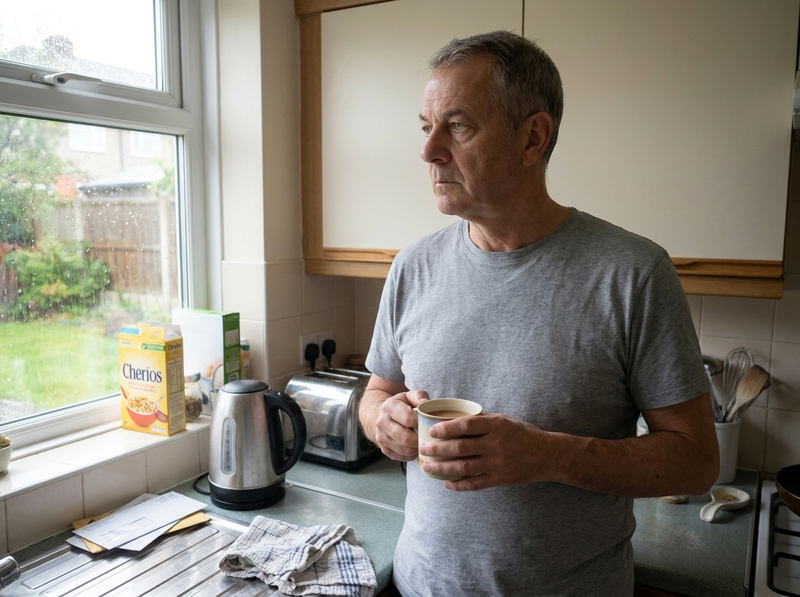
Most men reading this have already bought one of these. It didn't go well.
The failure is almost always the same, and it's not the compression itself. It's that the vest doesn't stay below the widest point of your torso.
A vest that rides up by mid-afternoon gathers into a band around your ribs — and that band becomes a new protrusion. Your shirt now drapes from the roll instead of your stomach. Worse than wearing nothing at all.


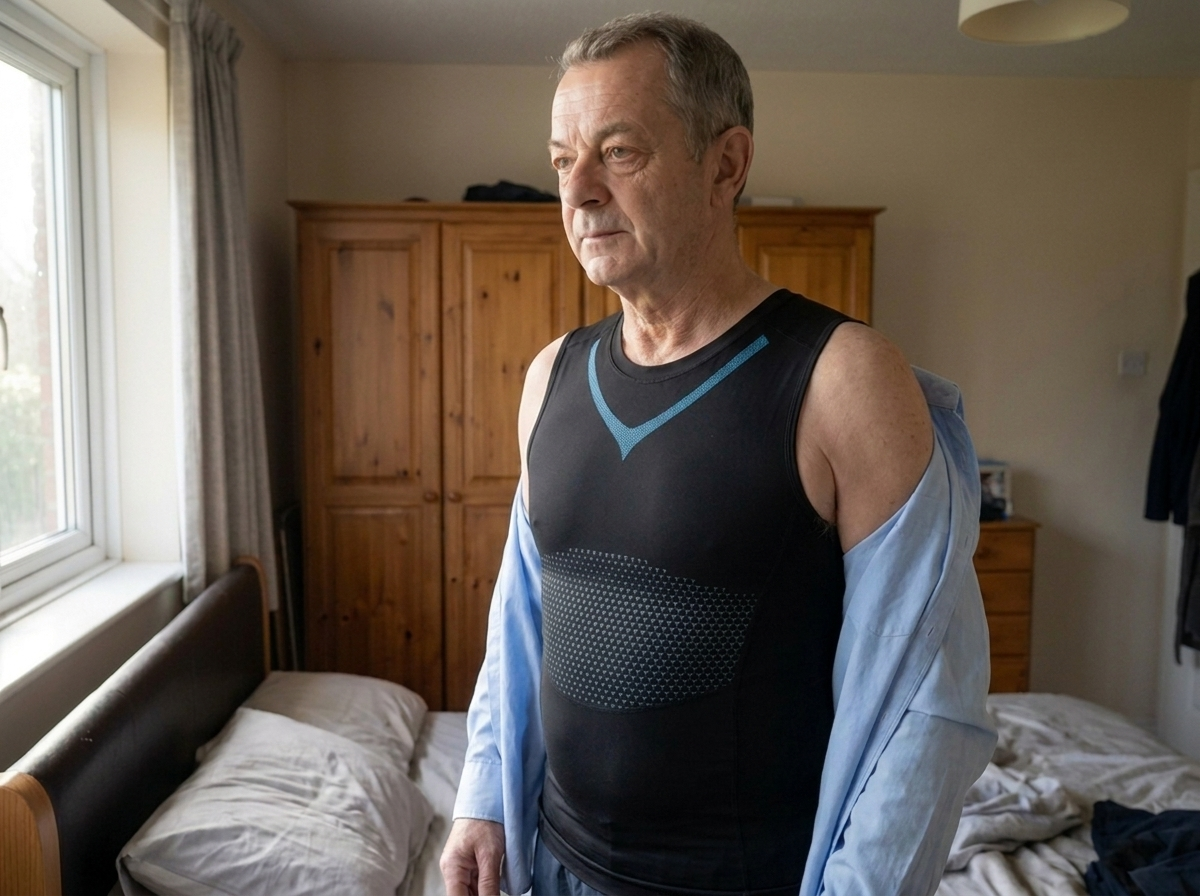
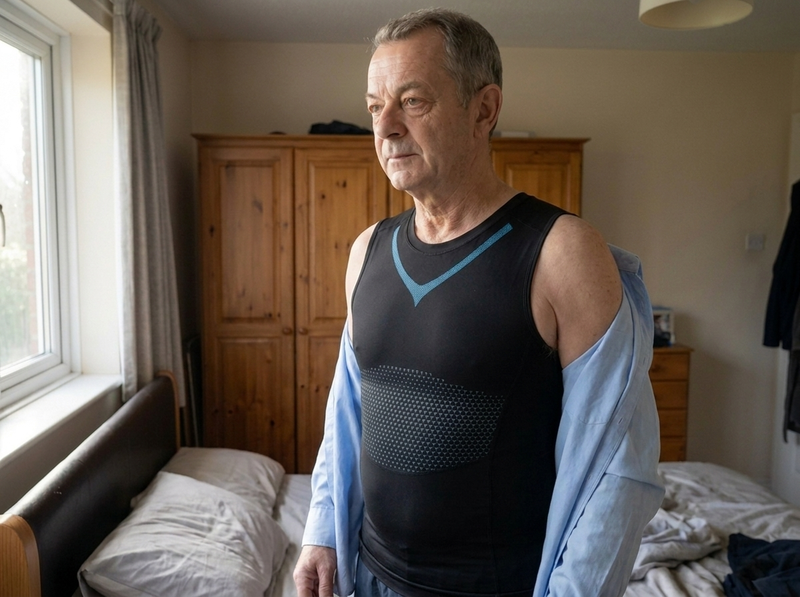
Orynel doesn't change your body. Nothing you wear does, and any product telling you otherwise is selling you something it can't deliver.
What it changes is where your shirt makes contact.
By smoothing the chest, stomach and flanks into one continuous line — and holding your shoulders back rather than letting them roll forward — the furthest-forward point moves in and moves up.
The shirt now drapes from a higher, flatter point. It falls closer to your actual shape instead of hanging off the widest one.
That's the whole mechanism. It's not dramatic and it's not medical. It's the same reason a well-tailored jacket makes any man look better without changing a single thing about him.
What men actually report:
You'll notice it first. Other people notice it about a fortnight later.
It works on day one
There's no programme, no protocol, no six weeks of anything. You put it on under your shirt and the outline is different immediately. That's the entire promise.
It stays where you put it
The most common failure in this category is the mid-afternoon roll. Orynel is cut long and hems flat, so the panel stays below the widest point of your torso through a full day of sitting, standing and moving.
Nobody can tell
Thin, flat-seamed, and smooth under a shirt. The point isn't for people to notice you're wearing something. It's for them to notice nothing at all — except that you look better.
You can wear it in summer
Breathable knit rather than stiff rubberised compression. Most men wear it under polos and shirts through warm weather without thinking about it.
It stops being a decision
This is the part men mention most. After the first fortnight it isn't a product you're trying — it's just part of getting dressed. You put it on with everything else and leave the house without running the usual mental check.

